
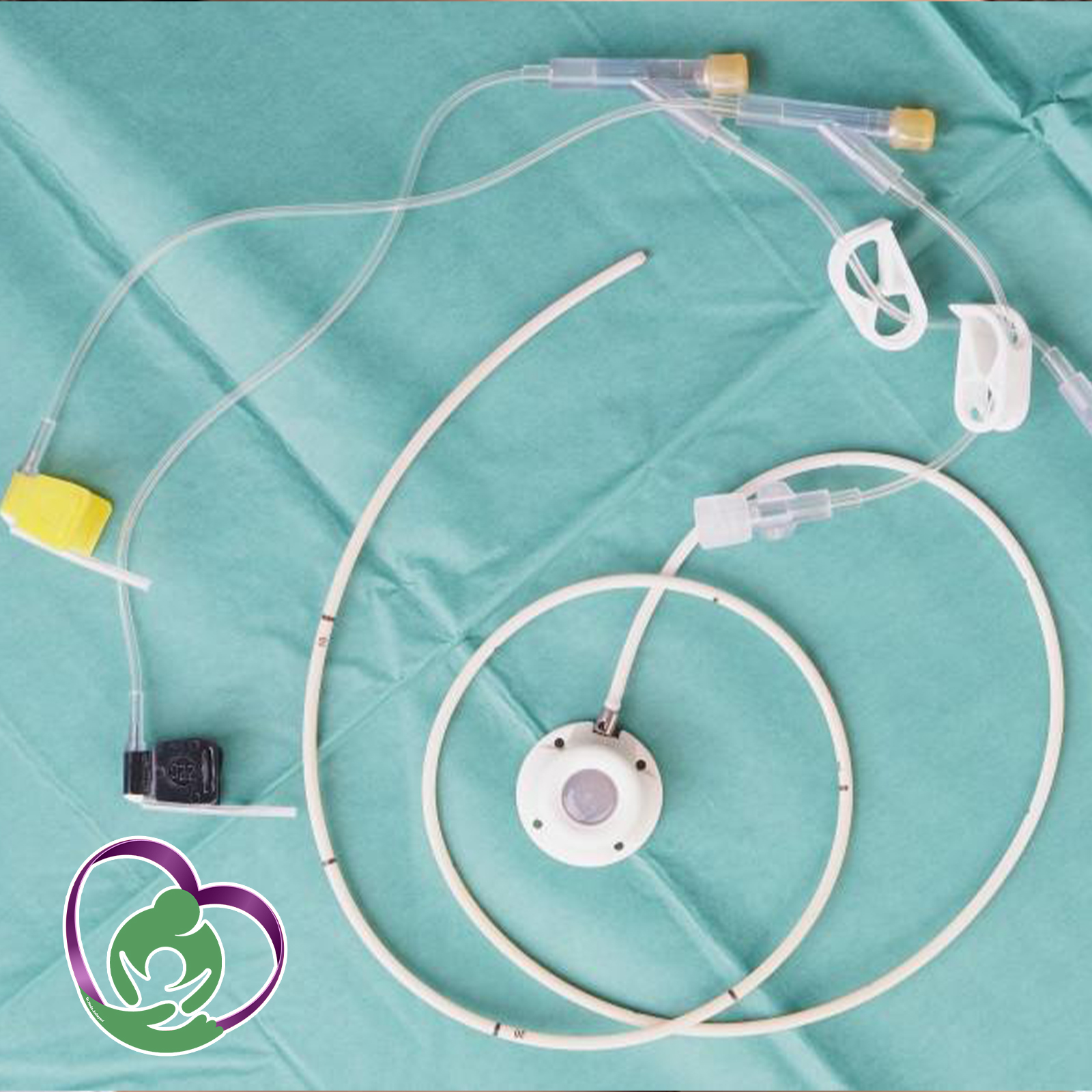
Port Placement or Implanted Port Catheter for Chemotherapy
Port placement is widely used in modern cancer care to reduce damage to peripheral veins and prevent complications associated with repeated intravenous access. Repeated injections in patients who require chemotherapy can lead to multiple needle punctures, burning, pain, and redness of the skin. Over time, peripheral veins may become damaged or difficult to access, creating additional problems for patients. An implanted port consists of a small metal or plastic device placed under the skin and connected through a catheter to a central vein, allowing intravenous treatments such as chemotherapy to be administered more easily.
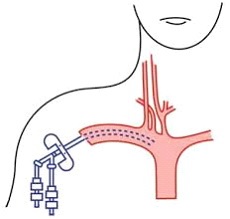
Port Placement and Location of the Port Catheter
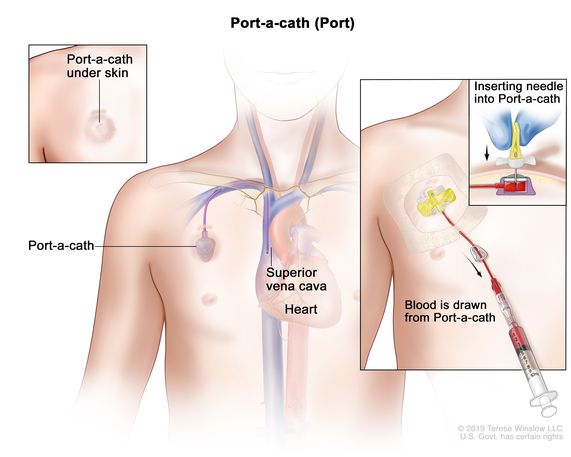
An implanted port provides convenient access to the central veins. The port is placed beneath the skin and is generally not visible or palpable from the outside. The veins in the area of the collarbone and near the heart are commonly used for port placement.
Port Placement Procedure
Port placement is usually an outpatient procedure performed under sterile conditions in an operating room. The port is placed beneath the skin, generally under local anesthesia, and the patient can usually return home after a few hours. With proper care, the port can remain usable throughout the chemotherapy course and, when necessary, for several months afterward.
When Is Port Placement Recommended?
In patients with cancer, chemotherapy medications can damage the walls of peripheral veins and eventually make venous access more difficult.
Patients receiving cancer treatment are among those who may benefit from central venous access devices such as implanted ports. Ports can be helpful at different stages of treatment, including during surgery, chemotherapy, and advanced stages of disease.
Port Placement in Children
Children with cancer often have small and fragile veins. Repeated attempts to access their veins can also negatively affect their mood and emotional well-being. An implanted port not only provides safer and more reliable access for injections and blood sampling but can also significantly reduce the stress associated with repeated needle sticks.
Activities After Port Placement in Children
Children can generally continue their usual activities, attend school, and engage in light play. However, activities that are strenuous or could cause direct impact to the port should be avoided.
Port Placement Procedure
Port placement is generally an outpatient procedure, and the patient can usually return home after a few hours. The procedure is performed under sterile conditions in an operating room, with the port placed beneath the skin under local anesthesia. The incision may be closed using absorbable sutures and appropriate surgical techniques.
With proper care, the port can remain usable throughout chemotherapy and, when necessary, for several months afterward.
How Long Can an Implanted Port Be Used?
An implanted port can be used for weeks, months, or even years. The treating physician determines when the port should be removed.
How Is an Implanted Port Removed?
When the physician determines that the port is no longer needed, it can be removed through a relatively simple surgical procedure performed in the operating room.
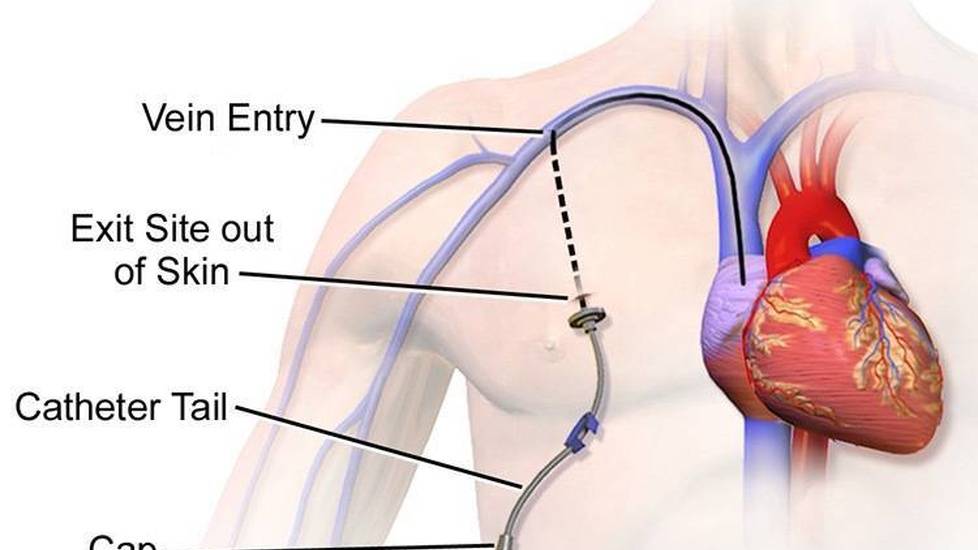
Types of Catheters Used in Central Venous Access
- Non-tunneled catheters
- Tunneled catheters
- Tunneled catheters with an implanted port
Benefits of Port Placement
Some of the benefits of an implanted chemotherapy port include:
- The port is placed beneath the skin, which helps protect it from external contamination.
- Patients can generally resume daily activities and showering soon after the procedure, according to their physician's instructions.
- It reduces repeated damage to peripheral veins and can decrease the need for repeated venipuncture.
- Depending on the type of port and clinical circumstances, the port needle may remain in place for several days, reducing the need for repeated needle insertion.
Pediatric Hematologist & Oncologist