
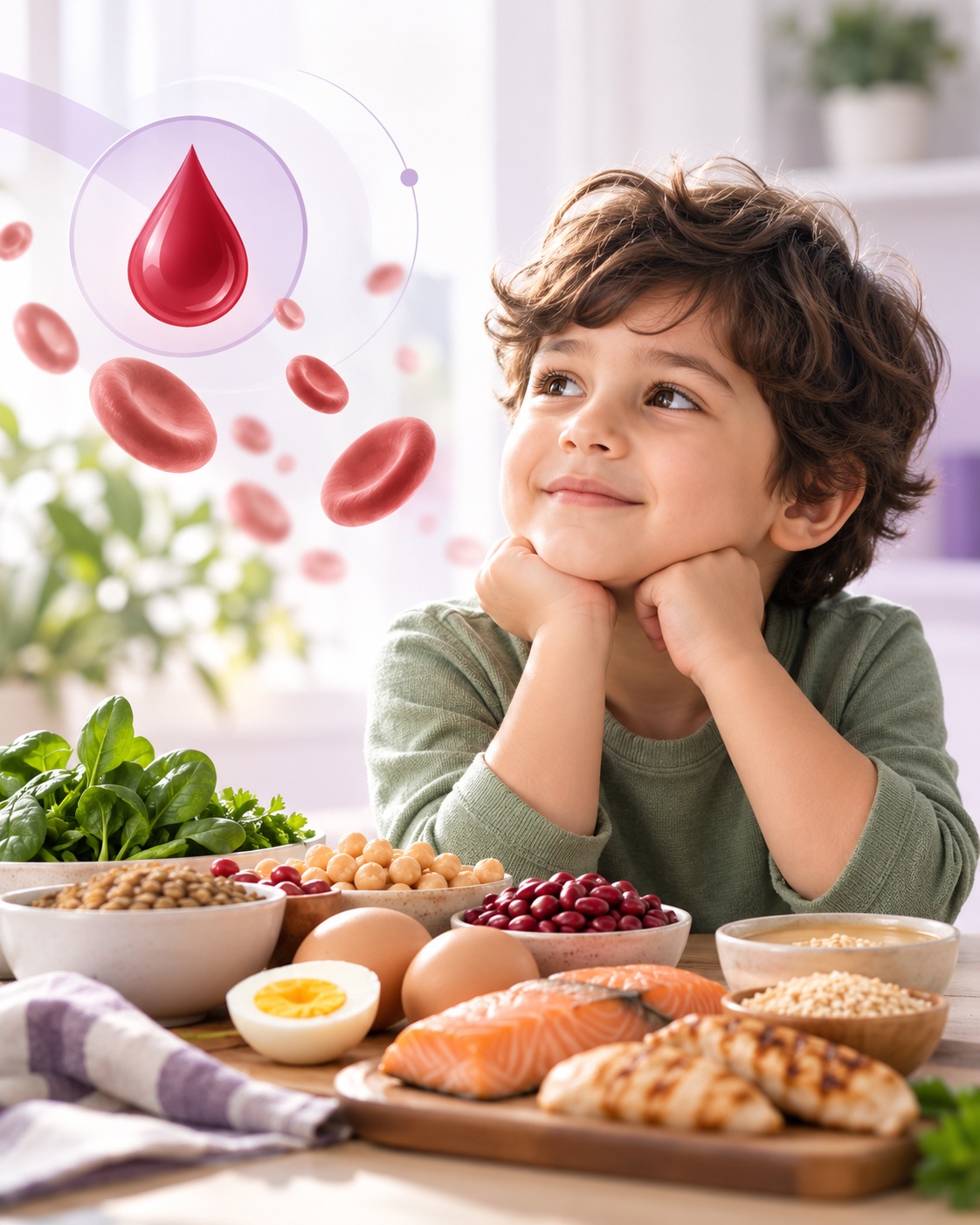
Evidence-Based · Practical Guide
Pediatric Anemia
What Every Parent and Every Physician Should Know

1. Iron Deficiency in Children: Why It Matters
Iron deficiency may affect a child's growth, learning, and focus. Prevention is important, and timely treatment may be needed when iron deficiency is identified.
This guide reviews possible signs of iron deficiency, dietary sources of iron, and a practical approach to evaluating pediatric anemia.
2. Signs That May Suggest Iron Deficiency
Possible signs listed in the clinical guide include:
- Fatigue and low energy
- Poor concentration or declining academic performance
- Loss of appetite
- Irritability
- Craving ice, dirt, or other non-food items
3. Dietary Sources of Iron
When red meat is not an option, other foods may contribute to dietary iron intake. The original guide lists the following alternatives:
Lentils, Beans, and Chickpeas
Plant-based foods that provide dietary iron.
Egg Yolks
Another food source included in the guide.
Chicken and Fish
Suggested as options when available.
Sesame Seeds and Tahini
Plant-based foods that can contribute to iron intake.
Dark Green Leafy Vegetables
Additional plant-based foods to consider.
4. A Practical Approach to Pediatric Anemia
The clinical algorithm in the original guide organizes the initial evaluation into four steps.
Step 1: Confirm Anemia
Compare hemoglobin (Hb) with normal reference values appropriate for the child's age.
Step 2: Classify Anemia Using MCV
- Microcytic: MCV below the age-specific range
- Normocytic: MCV within the age-specific range
- Macrocytic: MCV above the age-specific range
Step 3: Assess Bone Marrow Response
Use the reticulocyte count to assess the bone marrow response.
Step 4: Initial Laboratory Workup
- Complete blood count (CBC)
- Peripheral blood smear (PBS)
- Reticulocyte count
- Ferritin
5. Focused History and Physical Examination
Focused History
- Diet and nutritional intake
- Blood loss, including gastrointestinal or menstrual blood loss
- Family history of anemia or thalassemia
- Chronic illness or inflammation
- Medication or toxin exposure
Focused Physical Examination
- Pallor
- Jaundice
- Hepatosplenomegaly
- Lymphadenopathy
- Glossitis or angular cheilitis
- Koilonychia (spoon-shaped nails)
- Neurologic findings
6. Five Clinical Pearls
- Ferritin is a first-line test when iron deficiency is suspected.
- Ferritin may be normal despite iron deficiency in the presence of inflammation.
- Treat the underlying cause, not only the hemoglobin value.
- Age matters when interpreting hemoglobin values.
- Microcytosis should be assessed using age-specific MCV reference values.
7. Age-Based Hemoglobin and MCV Values
The following table reproduces the values shown in the supplied educational slide.
| Age | Minimum Hb (g/dL) | Minimum MCV (fL) |
|---|---|---|
| 0.5–1.9 years | 12.5 | 77 |
| 2–4 years | 12.5 | 79 |
| 5–7 years | 13.0 | 81 |
| 8–11 years | 13.5 | 83 |
| 12–14 years, female | 13.5 | 85 |
| 12–14 years, male | 14.0 | 84 |
| 15–17 years, female | 14.0 | 87 |
| 15–17 years, male | 15.0 | 86 |
Editorial note: The values above have been transcribed from the supplied slide and should be verified by the author against the intended reference before publication. Laboratory reference ranges and diagnostic thresholds may vary by age, population, and guideline.
References
Nelson Textbook of Pediatrics, 22nd Edition.
Nathan and Oski's Hematology of Infancy and Childhood, 7th Edition. Saunders, 2009, Table 474.1.