What Is Neuroblastoma?
Cancer begins when cells in the body start growing uncontrollably and destroy normal cells. Cells in almost any part of the body can become cancerous and can then spread to other parts of the body.
Neuroblastoma is a type of cancer that begins in some of the earliest forms of nerve cells. (The term “neuro” refers to nerves, while “blastoma” refers to a cancer that begins in immature or developing cells.) This type of cancer occurs most often in infants and young children.
Risk Factors for Neuroblastoma
A risk factor is anything that increases a person's chance of developing a disease such as cancer. Different types of cancer have different risk factors.
Lifestyle-related risk factors such as body weight, physical activity, diet, and tobacco and alcohol use play a major role in many adult cancers. However, these factors usually take years to affect cancer risk and are not thought to play a major role in childhood cancers such as neuroblastoma.
No environmental factor, such as exposure to chemicals or radiation during pregnancy or early childhood, has been established as a definite cause that increases the risk of neuroblastoma.
Age at Diagnosis
Neuroblastoma is most common in infants and very young children and is very rare in people older than 10 years.
Heredity
Most neuroblastomas do not appear to be inherited. However, about 1 to 2 percent of children with neuroblastoma have a family history of the disease.
Having Birth Defects (Congenital Abnormalities)
Some studies have shown that children with certain birth defects may have an increased risk of developing neuroblastoma. Some of the association between birth defects and neuroblastoma may be related to changes in genes that occur during fetal development.
Genes contain instructions in each of our cells that tell them what to do. Fetal development, which takes place in the mother's womb, is controlled by genes that tell cells how to grow and divide. If cell growth and development do not occur normally in the fetus, this can result in a birth defect. Changes in genes during fetal development may increase the risk of certain childhood cancers, including neuroblastoma.
Signs and Symptoms of Neuroblastoma
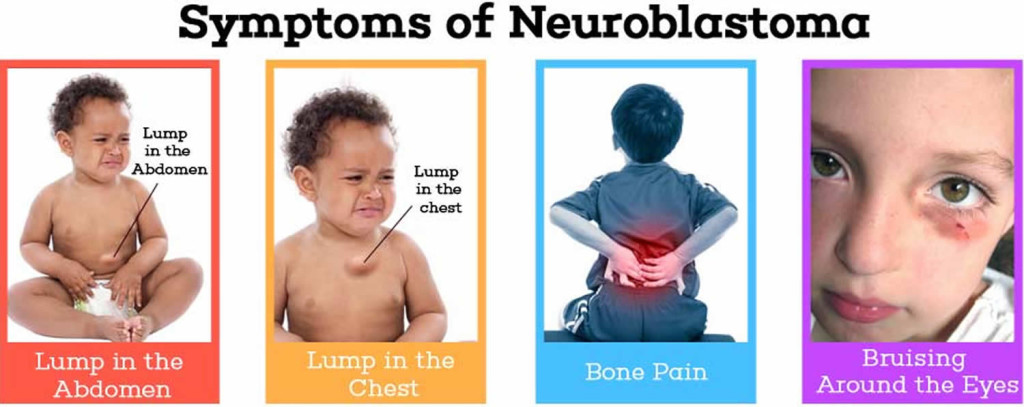
Neuroblastoma can begin in different parts of the body. Neuroblastoma cells can also sometimes release chemicals called hormones that can affect other parts of the body. As a result, neuroblastoma can cause a wide variety of signs and symptoms.
Some of the more common symptoms include:
- A lump or swelling in the child's abdomen, which may sometimes be painless
- Swelling in the legs or in the upper chest, neck, or face
- Difficulty breathing or swallowing
- Weight loss
- Loss of appetite or feeling full quickly
- Problems with bowel movements or urination
- Bone pain
- Lumps or bumps under the skin that may appear bluish
- Drooping eyelid and a small pupil (the black area in the center of the eye) in one eye
- Problems with sensation or movement in parts of the body
- Bulging or bruising around the eyes
Depending on where the tumor is located, how large it is, how far it has spread, and whether or not it produces hormones, the signs and symptoms may vary.
Many of these signs and symptoms may be caused by conditions other than neuroblastoma. However, if your child has any of these symptoms, consult your doctor so that the cause can be identified and treated if necessary.
Symptoms Caused by the Tumor
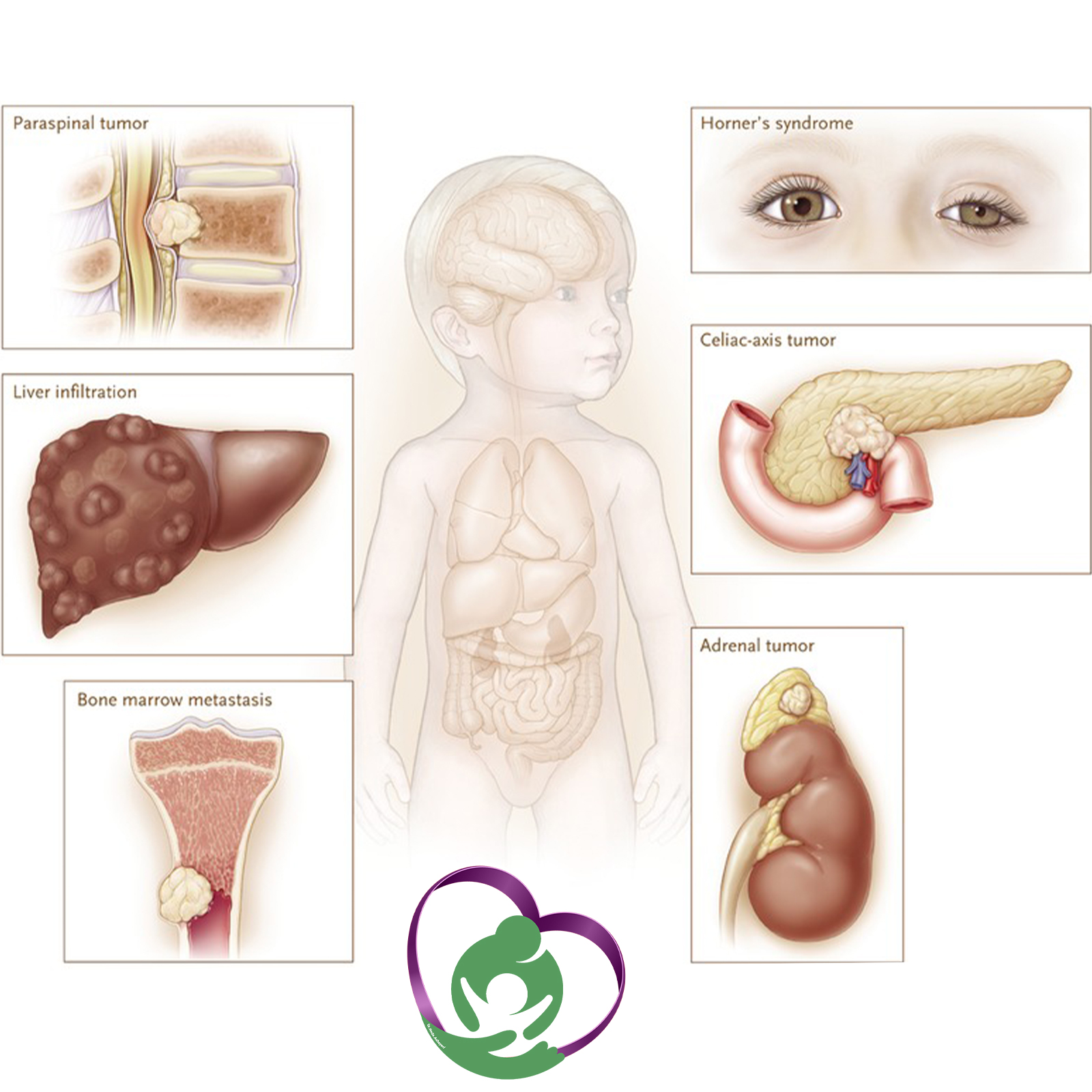
Abdominal or pelvic tumors: One of the most common signs of neuroblastoma is a large mass or swelling in the child's abdomen. The child may not want to eat, which can lead to weight loss. If the child is old enough, they may complain of feeling full or having abdominal pain. However, the mass itself is usually not painful when touched.
Sometimes, a tumor in the abdomen or pelvis can affect other parts of the body. For example, tumors that press on or grow into blood vessels and lymphatic vessels in the abdomen or pelvis can interfere with the return of fluid to the heart. This can sometimes lead to swelling in the legs and, in boys, swelling of the scrotum.
In some cases, pressure from a growing tumor can affect the child's bladder or bowel, causing problems with urination or bowel movements.
Tumors in the chest or neck: Tumors in the neck often appear or feel like a firm, painless lump.
If the tumor is in the chest, it may press on the superior vena cava, a large vein in the chest that carries blood from the head and neck back to the heart. This can cause swelling of the face, neck, arms, and upper chest, sometimes with a reddish skin color. If it affects the brain, it can also cause headaches, dizziness, and changes in consciousness.
Tumors in the chest or neck may also press on the throat or windpipe, which can cause coughing and difficulty breathing or swallowing.
Neuroblastomas that press on certain nerves in the chest or neck can sometimes cause other symptoms, such as a drooping eyelid and a small pupil (the black area in the center of the eye), which are features of a condition known as Horner syndrome.
Pressure on other nerves near the spine may also affect a child's ability to feel or move their arms or legs.
Symptoms Caused by Cancer Spreading to Other Parts of the Body
Many neuroblastomas have already spread to lymph nodes or other parts of the body by the time they are diagnosed.
Spread to lymph nodes: Lymph nodes are bean-sized groups of immune cells found throughout the body. Cancer that has spread to the lymph nodes can cause them to become enlarged. They may sometimes be felt as lumps under the skin, especially in the neck, above the collarbone, under the arm, or in the groin. It is important to note that enlarged lymph nodes in children are most often caused by infection, but they should be evaluated by a doctor for reassurance.
Spread to the bones: Neuroblastoma can sometimes spread to the bones. A child who can speak may complain of bone pain. The pain may be severe enough to cause the child to limp or refuse to walk. If the cancer spreads to the bones of the spine, tumors can press on the spinal cord and cause weakness, numbness, or paralysis of the arms or legs.
Spread to the bones around the eyes is common and can cause bruising around the eyes or make the eyeball protrude slightly. Cancer may also spread to other skull bones and cause a lump under the scalp.
Spread to the bone marrow: If cancer spreads to the bone marrow, the inner part of certain bones where new blood cells are made, the child may not have enough red blood cells, white blood cells, or platelets. This lack of blood cells can lead to fatigue, irritability, weakness, recurrent infections, and excessive bruising or bleeding from small cuts or scratches.
Bleeding problems: Rarely, large tumors can begin to break down, resulting in the loss of blood-clotting factors. This can lead to a high risk of serious bleeding, known as consumptive coagulopathy, which can be life-threatening.
Stage 4S (MS) Neuroblastoma: A special type of neuroblastoma, known as stage 4S or MS, usually occurs during the first few months of life. In this particular form, neuroblastoma has spread to the liver, skin, and/or bone marrow in small amounts. Bluish or purplish bumps that look like small blueberries may be a sign that the cancer has spread to the skin. The liver can become very enlarged and may be felt as a mass on the right side of the abdomen. Sometimes it can become large enough to press on the lungs, making it difficult for the baby to breathe. Although stage 4S neuroblastoma has already spread, it is highly treatable and often becomes smaller or disappears on its own. Most children with this type of neuroblastoma can be cured.
Treatment of Neuroblastoma
Treatment of neuroblastoma varies mainly according to the child's risk group. In general, younger children with smaller tumors are considered low risk, while older children, children with tumors that have spread throughout the body, and children whose tumors have unfavorable features or extra copies of the MYCN gene are considered high risk. Some infants with neuroblastoma may still be considered low risk even when malignant cells have spread throughout the body, particularly if their tumors do not have extra copies of MYCN or other unfavorable features.
Treatment may include surgery, chemotherapy, MIBG therapy, immunotherapy, bone marrow transplantation, and other approaches. The physician selects the most appropriate treatment based on the child's risk group and individual condition.
Dr. Neda Ashayeri
Pediatric Hematologist & Oncologist
Copying this content with attribution to the author and a link to the website is ethical and permitted.